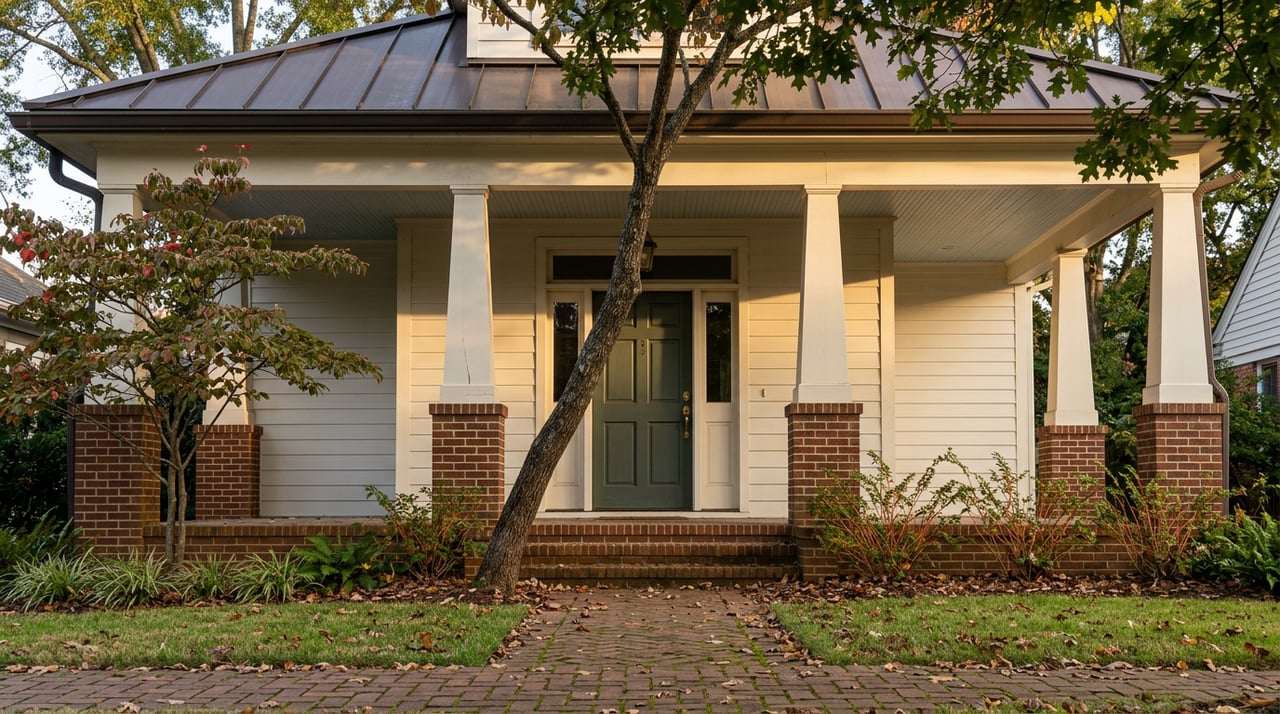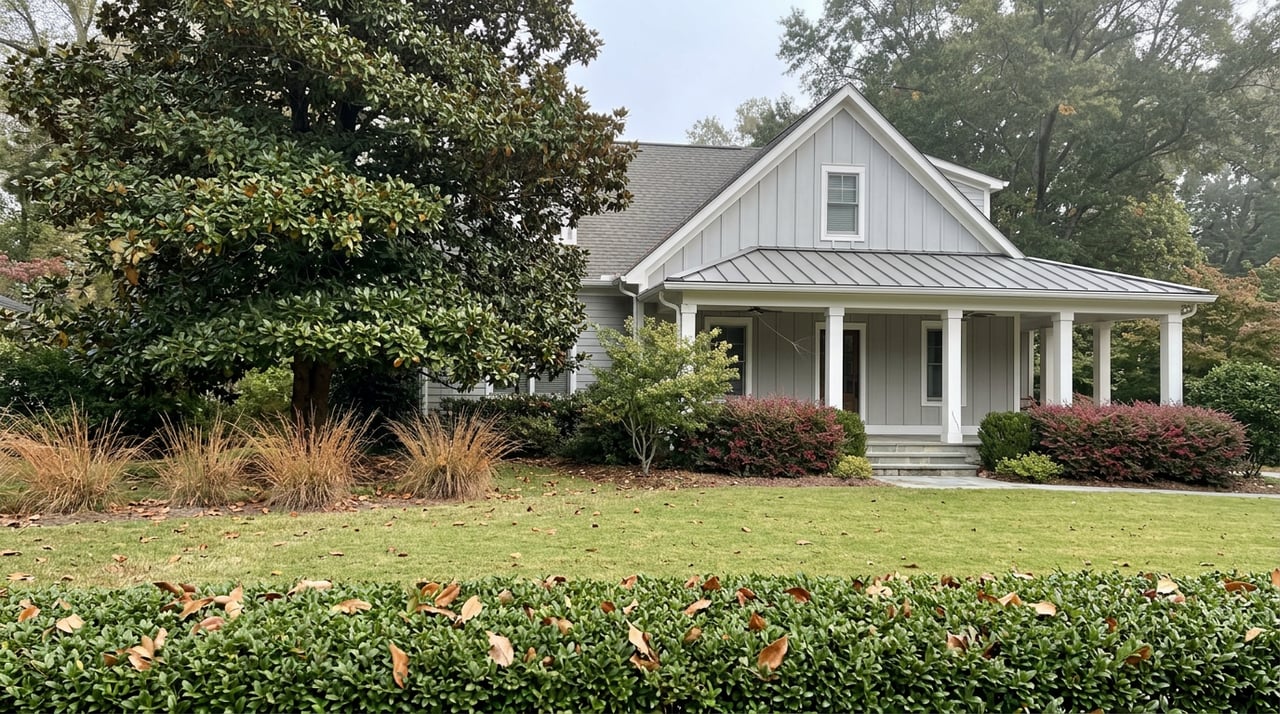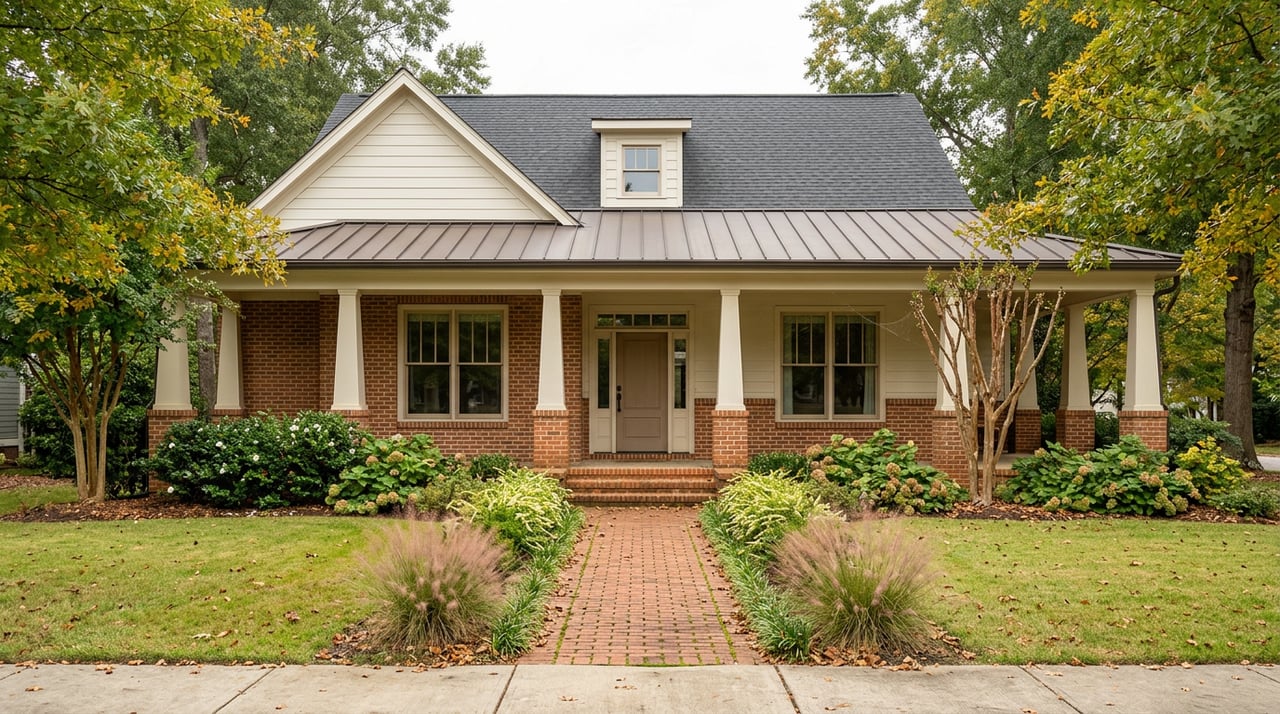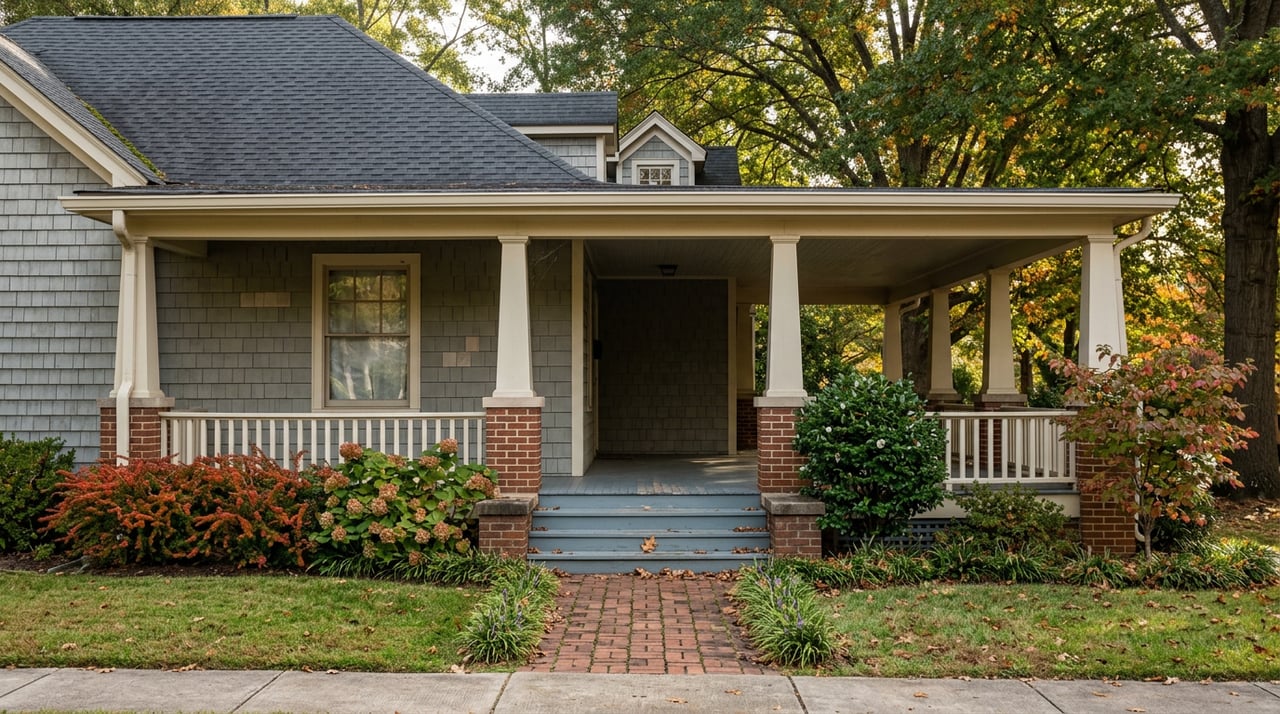
Say you buy a house in Trinity Park with a plan to swap out the vinyl siding your inspector flagged. You call a contractor, pull a standard building permit, and get to work. Two neighborhoods over, on a house that looks nearly identical from the sidewalk, that same siding job in Watts-Hillandale means a stop at the Durham Historic Preservation Commission first. Same century of construction, same Craftsman bones, completely different process to touch the outside of the house.
Most guides to these two neighborhoods stop at price and walkability. Both numbers exist, and both are worth knowing. But the fact that actually separates Trinity Park from Watts-Hillandale isn't on a portal's summary page, and it matters more than either median if you're planning to renovate.
Two Kinds of "Historic"
Both neighborhoods carry the word historic, and both earned it. Trinity Park's National Register district, first listed in 1984 and expanded in 2004, covers roughly 40 blocks of Queen Anne and Craftsman-bungalow homes built between the 1890s and 1960, according to the National Register documentation, with the neighborhood association's own history page adding Victorian and Neo-Colonial styles to that mix. Watts-Hillandale carries its own historic pedigree along Club Boulevard and the streets that fan out from Hillandale Road.
The difference is what happens after the plaque goes up. Durham currently has eight Local Historic Districts with actual design-review authority: Trinity Heights, Watts-Hillandale, Morehead Hill, Holloway Street, Golden Belt, Fayetteville Street, Downtown Durham, and Cleveland Street, according to the city. Trinity Park is not one of them. Its own neighborhood association has stated plainly that Trinity Park has no local district protections and no design review board with power to approve or deny exterior changes.
A National Register listing tells you a neighborhood's story matters. A Local Historic District tells you the city will have an opinion about your porch.
Trinity Park's neighbors have actually debated closing that gap twice, in a March 2020 board meeting and again at a June 2021 session that drew about 45 residents, according to the Trinity Park Neighborhood Association. The panel included Tony Sease, an architect and Trinity Park resident who now sits on the Durham Planning Commission, and David Berger, a Duke economist who lives in the neighborhood and studies housing markets. Both times, the association decided the board itself would not push for designation. That's not an oversight. It's a neighborhood repeatedly choosing flexibility over formal review.
What a Certificate of Appropriateness Actually Requires
If you buy in Watts-Hillandale, or any of Durham's other seven Local Historic Districts, exterior work runs through a Certificate of Appropriateness, or COA. The Trinity Park association's own explainer breaks the process into three tiers:
- Regular maintenance and repair, which needs no COA at all
- Minor changes, like small additions or rear decks, processed administratively by city staff
- Major changes, like a new garage or an accessory dwelling unit, reviewed by the Historic Preservation Commission itself
Paint color is never part of the review, per the association's own FAQ. The Historic Preservation Commission meets monthly to work through major COA requests, and the process can add real time to a renovation timeline, particularly for anything that changes a home's footprint or its street-facing appearance.
None of this means new construction stalls out in a Local Historic District. Across from Westover Park in Watts-Hillandale, a project called Maryland + Wagoner recently added four residences, three new builds paired with one restored heritage home, designed by Center Studio Architecture in partnership with Brown Roots. The new homes share a courtyard with a fire pit and bike storage while sitting next to the preserved original. That's what passing design review actually looks like in practice: contemporary building still happens, it just has to answer to the house next door.
The Median That Keeps Changing
Here's where the second layer of this comparison gets interesting. If you've been checking home search sites for a median price on Trinity Park, you've probably seen several different numbers, and none of them agree.
| Neighborhood | Reporting window (2026) | Reported price | What's behind the number |
|---|---|---|---|
| Trinity Park | March | $445,000 median sale | Based on 5 closings |
| Trinity Park | May | $975,000 median list | Asking prices only, no closings counted |
| Trinity Park | August | $707,000 median sale | Current monthly snapshot |
| Watts-Hillandale | Trailing 12 months (through April) | $505,000 median sale | 12-month rolling figure |
| Watts-Hillandale | April | $565,000 median list | 34 days on market |
| Watts-Hillandale | July | $534,000 median list | 63 days on market |
Trinity Park's reported median swung from $445,000 in March to a $975,000 asking-price median in May to a $707,000 sale-price median in August, all within the same year and without the neighborhood's actual housing stock changing at all. Watts-Hillandale, over the same stretch, held inside a roughly $60,000 band. The difference isn't that one neighborhood is appreciating faster. It's that Trinity Park sells so few homes in a typical month, sometimes just five, that a single high-end sale or a run of asking-price-only listings can swing the reported number by hundreds of thousands of dollars.
Why One Market Holds Still and the Other Doesn't
Trinity Park's National Register status keeps new competing construction out of a fairly small, fixed pool of roughly 40 blocks, which limits how many homes are ever actually for sale at once. Watts-Hillandale, with more total housing stock and steadier turnover, produces a larger monthly sample, and larger samples produce steadier numbers. It's the same reason a poll of 5 people can tell you almost nothing and a poll of 500 can tell you quite a lot.
Even the walkability scores tell the same story. Watts-Hillandale consistently posts a Walk Score of 55, a Transit Score of 34, and a Bike Score of 74. Trinity Park's reported Walk Score, by contrast, shows up as 62 on one site, somewhere in the 70s on another, and as high as 90 on a third. When a neighborhood trades this thinly, even its supposedly objective metrics start to disagree with each other.
The Neighborhoods Aren't Interchangeable Beyond the Spreadsheet
Trinity Park sits between downtown Durham and Duke's East Campus, close enough to walk to Brightleaf Square and the Ninth Street district. Its neighborhood association runs an active calendar, including the Rock in the Park concert series, and the district includes individually notable homes like the Bassett-Brown House. One live question for the neighborhood's future involves the Durham School of the Arts, a 1923 Neoclassical Revival building by Milburn & Heister that contributes to the Trinity Park Historic District. Durham Public Schools plans to relocate the school to a new site in 2027, and preservation advocates are actively working through what becomes of the 15-acre campus, according to Preservation Durham. Whatever happens to that site will shape Trinity Park's western edge for a long time.
Watts-Hillandale has its own texture. Ellerbe Creek splits the neighborhood, with homes north of the creek mostly built from the 1940s through the 1960s. Hillandale Golf Course borders one edge, Westover Park anchors another, and Broad Street brings in local dining and coffee within walking distance. The neighborhood association runs its own recurring events, including an Art Walk. It's a different daily rhythm than Trinity Park's, even though both sit inside a similar radius of Duke.
Which Buyer Fits Where
If you're planning significant exterior changes, an addition, a garage conversion, or anything that touches the street-facing profile of the house, Trinity Park gives you a faster, less regulated path to get there. That flexibility comes with a tradeoff: the pricing data you'll find while house hunting is genuinely less reliable, and you should treat any single month's median as a rough signal rather than a fact, then verify against actual recent comparable sales before you write an offer.
If predictable design standards and a steadier resale market matter more to you than renovation speed, Watts-Hillandale's Local Historic District status gives you both a more stable price picture and a design review process that, judging by projects like Maryland + Wagoner, still leaves room for thoughtful new construction. The tradeoff there is time. A major COA goes through a monthly commission meeting, not a same-week permit desk.
Neither neighborhood is the better choice in the abstract. They're built around different bets on how a home's exterior should be governed, and that bet shows up in the data long before it shows up in a renovation invoice.
Common Questions
Is Trinity Park an official historic district? Yes, on the National Register of Historic Places, which recognizes the area's architecture and history. It is not a City of Durham Local Historic District, so it carries no local design review authority over exterior changes.
What exactly is a Certificate of Appropriateness? It's an approval required for exterior work on a property inside one of Durham's eight Local Historic Districts. Minor changes are handled administratively by city staff, while major changes go before the Historic Preservation Commission at its monthly meeting.
Why do I see such different median prices for Trinity Park depending on where I look? Trinity Park sells very few homes most months, sometimes only around five. A small number of transactions makes the reported median highly sensitive to which specific homes happened to close, so figures can swing by hundreds of thousands of dollars from one month to the next.
Does being in a Local Historic District lower my property taxes? No. District status alone does not reduce property taxes. Durham's only tax incentive tied to historic preservation applies to individual local landmark designation, a separate and harder-to-get status that can cut property taxes in half for that specific property, according to a city planner who addressed the question directly at a 2021 Trinity Park community meeting.
Comparisons like this one are exactly why a market snapshot from a portal only gets you partway to a real decision. If you're weighing Trinity Park against Watts-Hillandale, or any two Durham neighborhoods that look similar on paper, Dana Cantrell Realty can walk the actual comparable sales, the renovation rules, and what they mean for your specific plans. Let's Connect.