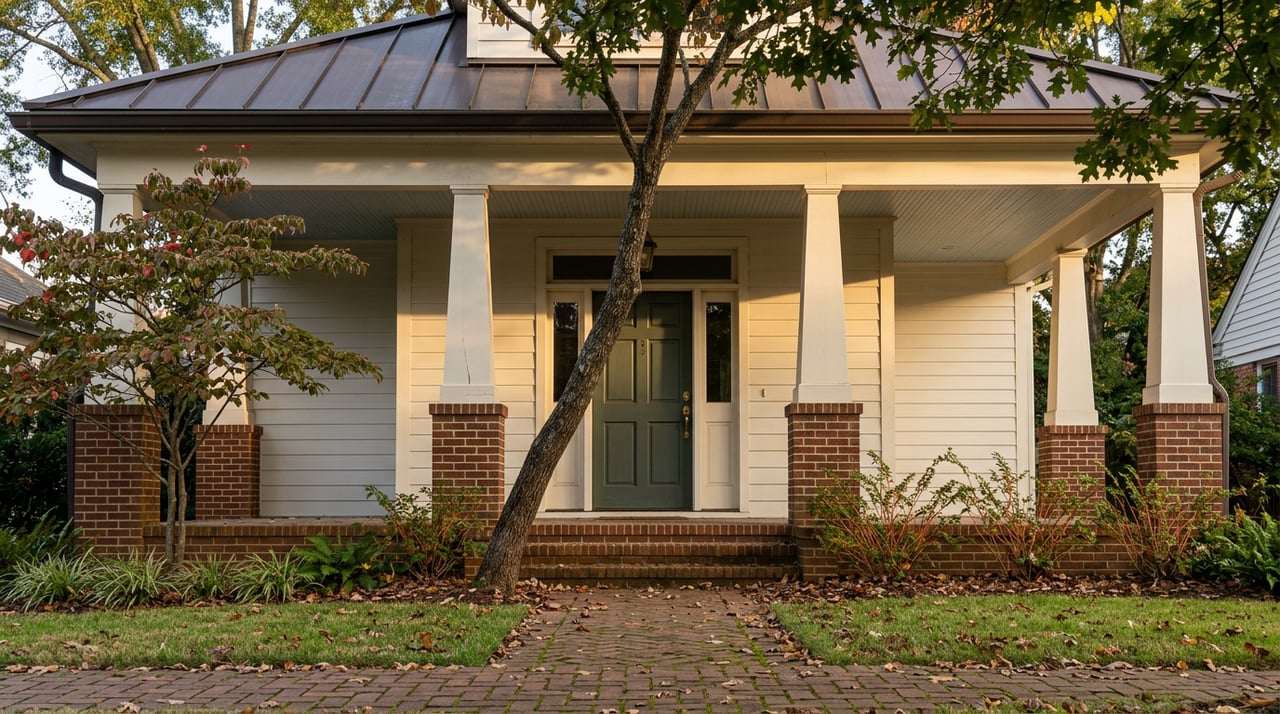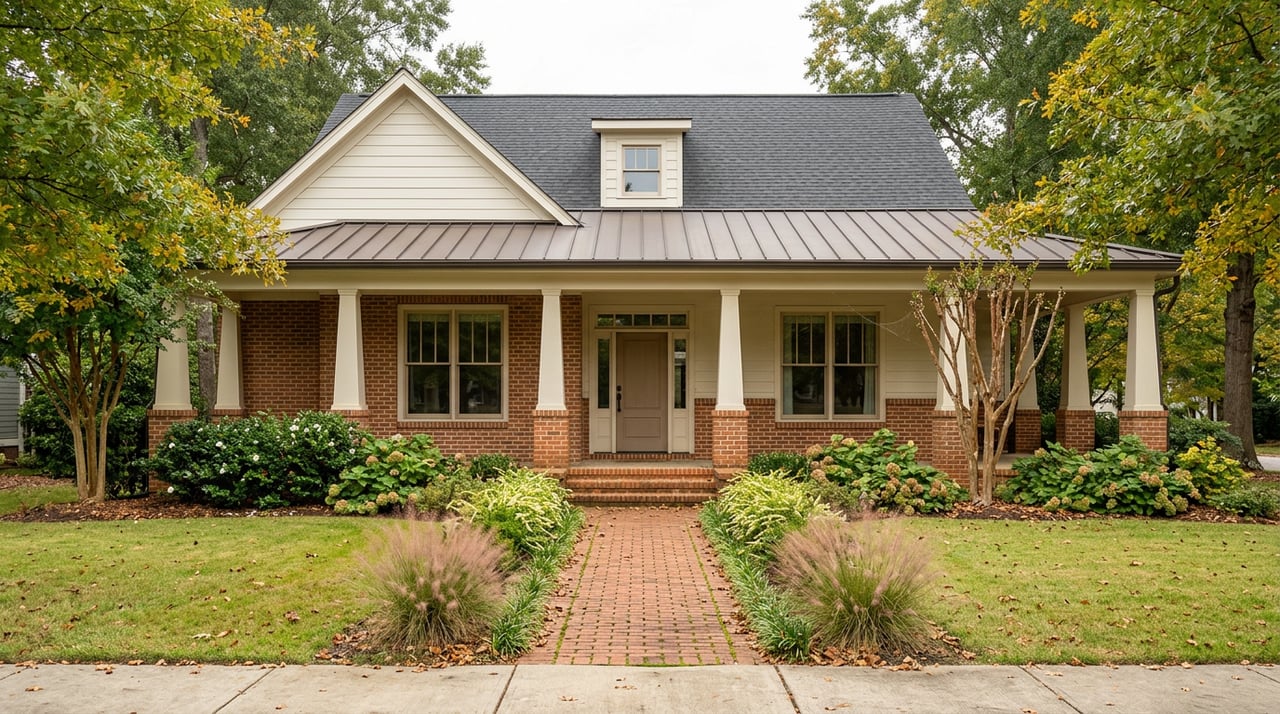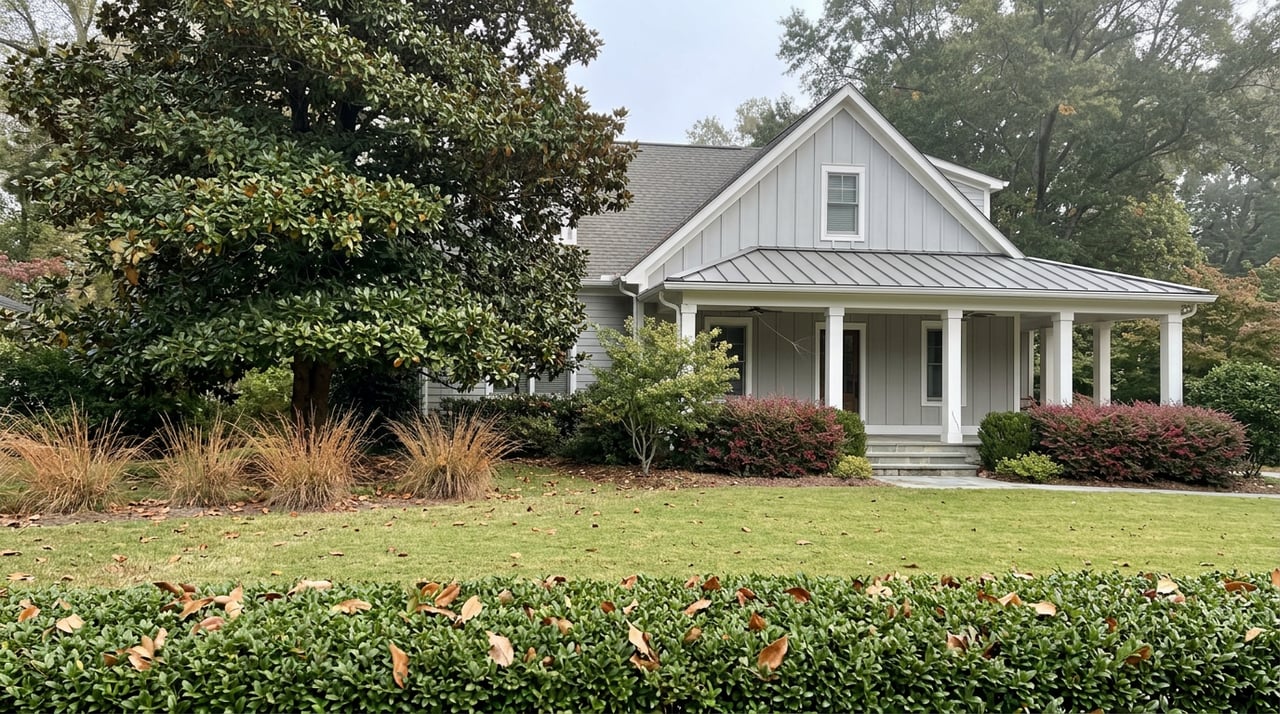
Drive down Fordham Boulevard past Eastgate Crossing on any given weekend and you will see cranes, leasing banners, and a bus stop that actually gets used. Turn onto almost any residential street a mile in either direction and the picture flips: quiet single-family blocks that look, more or less, the way they looked in 1995. Both scenes sit inside the same town limits. Only one of them has done any real building in the last decade.
That split matters if you are comparing Chapel Hill to Durham or Raleigh on price alone. A recent housing analysis put Chapel Hill's median home cost at $620,000, against $394,000 in Durham and $427,000 in Raleigh, a gap the same piece traces to decades of policy that treated growth as something to be managed down rather than up, anchored by a 1980s-era "rural buffer" agreement between Chapel Hill, Carrboro, and Orange County. More recent sale data backs up the persistence of that gap. In the three months ending in May 2026, Chapel Hill's median sale price ran $627,000, up 16 percent year over year, with homes fielding five offers on average. Homes are taking longer to sell than they did a year ago, up to 29 days from 14, which suggests the frenzy has cooled slightly even as the price line keeps climbing.
Here is the part that does not show up on a portal search: almost all of the new housing that has hit the market to answer that demand landed in one 180-acre pocket of town.
One Zoning Code Did Almost All the Building
In 2014, Chapel Hill's Town Council created a form-based code for what was then called the Ephesus-Fordham District and is now known as Blue Hill, covering roughly 180 acres that include the Eastgate Crossing, RAM Plaza, and Village Plaza shopping centers. Form-based code regulates the shape and feel of buildings rather than sorting land into rigid single-use categories, and the practical effect in Blue Hill was to let developers build market-rate housing without the review steps required everywhere else in town.
The results are hard to argue with on volume alone. That single district has added more than 2,000 homes since 2014, which is close to one-tenth of all the housing units currently standing in Chapel Hill. Walk it and you will pass The Berkshire, right on the D bus route into downtown and the UNC medical campus, the Sunstone apartment complex just west of the core, and two town-backed affordable projects, Greenfield Place with 80 units for working families and Greenfield Commons with 69 units reserved for seniors. The older Park Apartments, once a source of below-market rents, came down to make room for new construction, with the developer contributing $1.5 million to the town's affordable housing fund as part of that deal.
None of that happened under the same rules that apply to the rest of Chapel Hill. Blue Hill's code removed the site plan review, concept plan review, and public hearing requirements that other projects in town still had to clear, and it also eliminated the Resource Conservation District standards, an environmental overlay that limits development near streams and low-lying areas everywhere else in Chapel Hill.
| Zoning feature | Blue Hill District (2014 code) | Rest of Chapel Hill (pre-2026) |
|---|---|---|
| Staff site plan review | Not required | Required |
| Council concept plan review | Not required | Required |
| Public hearing before approval | Not required | Required |
| Resource Conservation District standards | Removed | Applied |
That table is the actual mechanism behind the price gap. One zoning regime let builders move fast. The other, covering nearly the whole town, kept most residential land locked into a review process built for a slower, smaller Chapel Hill.
The Tradeoff Nobody Put on the Listing Sheet
Speed had a cost. Because the Resource Conservation District was removed from the Blue Hill code, one property owner was permitted to raise an entire creekside parcel by two and a half feet ahead of building the Fordham Apartments, something that would not have been allowed under standard town rules anywhere else. According to an account from the Chapel Hill Alliance for a Livable Town, both the areas upstream and downstream of that project saw worse flash flooding during a September 2018 storm than similar storms had produced before construction began.
That history is worth knowing if you are weighing a home near Booker Creek or anywhere close to the Blue Hill corridor, not as a reason to avoid the area, but as a reminder that the same code that delivered 2,000 homes also traded away a layer of environmental review that protects the rest of town. It is also exactly the kind of tension the Town Council has spent the last two years arguing over as it decides whether, and how, to extend Blue Hill's approach elsewhere.
The Vote Happening This Fall
Chapel Hill has not rewritten its full zoning ordinance, the Land Use Management Ordinance, since 2003. That is changing, in stages, right now.
The Council took a first swing at loosening rules town-wide in November 2025 and came up short, rejecting a package of amendments in a 4-4 tie that would have relaxed duplex requirements, dropped minimum parking counts, and trimmed the concept plan review stage. The proposal came back revised and passed unanimously on January 21, 2026, eliminating site plan review for all projects, removing parking minimums for two-family dwellings, and raising the maximum size allowed for a duplex from 3,000 to 5,000 square feet.
That was the appetizer. The full rewrite, the one meant to replace the 2003 ordinance wholesale, cleared a major milestone on July 16, 2026, when the town released a complete public draft. Public input sessions ran at the Chapel Hill Public Library on August 17 and are scheduled again for September 10, and the Town Council is expected to take a final vote this November.
You do not need to guess whether this radiates beyond Blue Hill's original footprint. It already has. In April 2025, the Council approved rezoning a stretch of South Elliott Road, right next to the district, so Rockwood Development Group could build residential and retail space along with a parking deck and a multi-use path connecting to Couch Road. The project still needs a contractor before it breaks ground, so nothing there is guaranteed, but the direction is clear: the growth that Blue Hill pioneered in 2014 is starting to spill into adjacent parcels well before the town-wide rewrite is finalized.
What This Means If You're Choosing a Chapel Hill Neighborhood Right Now
If you are comparing streets rather than just towns, a few things follow directly from all of this.
Established neighborhoods with existing land-use covenants, the kind you find in many of Chapel Hill's older single-family sections, are explicitly carved out of the missing middle changes under discussion. If you want a home where the surrounding block is unlikely to look different in ten years, a covenant-protected neighborhood gives you that in writing, regardless of how the November vote turns out.
Corridors are a different story. Town planners have pointed to arterial roads that already carry bus routes, sidewalks, and bike lanes as the logical places for added density under the new rules, on the theory that the infrastructure to support more residents is already sitting there unused. If you are buying with an eye toward future redevelopment potential, whether as an investor or as someone who might add a second unit down the road, a lot fronting one of those corridors carries different long-term upside than a lot buried three streets deep in a covenanted subdivision.
For sellers, the Blue Hill experiment offers a genuinely useful data point. Ten years of concentrated new supply in one small district has not cooled Chapel Hill's town-wide median. If anything, the price gap with Durham and Raleigh has held. That is worth knowing if you are wondering whether a wave of new construction somewhere in town might undercut the value of your own home. So far, it has not worked that way here.
A Few Questions Worth Asking Before You Write an Offer
Does this affect my subdivision if it already has a covenant restricting lot use? No. Town planning staff have said covenant-protected neighborhoods are not being considered for missing middle housing under the current draft.
What's actually different between the January 2026 changes and the bigger rewrite coming this fall? January's amendments were narrow fixes, mainly eliminating site plan review and parking minimums for duplexes. The full LUMO rewrite is a comprehensive replacement of the entire 2003 ordinance, covering everything from lot sizes to how commercial and mixed-use districts are defined.
When does this get decided? Public comment continues through the September 10 session, with a Council vote expected in November 2026.
Will more supply actually bring prices down? The Blue Hill District is the closest thing Chapel Hill has to a real-world test, and a decade of concentrated building there has not slowed the town's overall price growth. Anyone telling you the November vote will make Chapel Hill affordable overnight is guessing further out than the data supports.
None of this is a reason to wait on the sidelines, but it is a reason to look past the median price and ask what is actually zoned, and what might be rezoned, on the specific street you are considering. That kind of read takes someone who follows these council votes as closely as the listings themselves.
If you want help figuring out what a specific Chapel Hill block looks like under the current rules, and what it might look like after November, Dana Cantrell Realty can walk through it with you. Let's Connect.