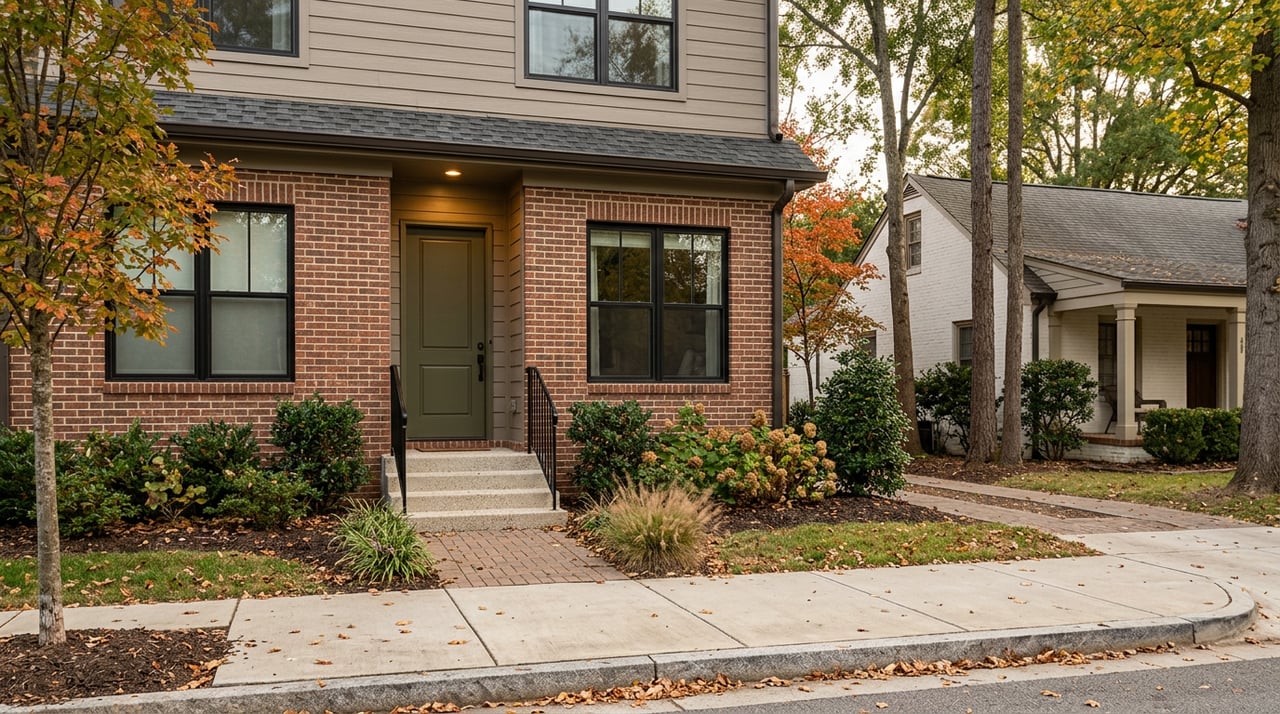
Trying to decide between a Cary townhome and a single-family house? You are not alone. Many buyers moving to or within the Triangle weigh space, upkeep, and budget against commute and lifestyle. In this guide, you’ll get a clear look at costs, daily living tradeoffs, and a simple decision path tailored to Cary. Let’s dive in.
Cary prices at a glance
Cary’s citywide median sale price has hovered in the mid 500s in recent market snapshots, with some softening from earlier peaks. In general, townhomes tend to price lower than single-family homes. As you sort options, expect rough bands like these, with wide variation by age, size, and neighborhood:
- Townhomes and attached units: roughly low 300s to upper 600s.
- Single-family homes: roughly low 400s to 1.3M+, with higher tiers in established enclaves.
Inventory shifts month to month, so compare recent solds in your top neighborhoods before you set final targets.
Townhome vs. house: lifestyle fit
Privacy and noise
- Single-family homes usually give you more buffer from neighbors, fewer shared walls, and more control over your space. If quiet and privacy rank high, this is a strong fit.
- Townhomes and condos share walls and often have denser parking and closer setbacks. Many newer builds are well insulated, and end units can offer more light and separation, but you will have closer neighbors.
Outdoor space and yards
- Single-family homes offer private yards for gardening, play, and pets.
- Townhomes trade yard size for shared spaces and easier upkeep. Cary’s public outdoor network fills the gap. The Town notes more than 80 miles of greenways and about 2,600 acres of parks and open space. You can lean on these trails and parks if you prefer a low-maintenance home with easy outdoor access. See the Town’s greenways update for context on the system’s scale and growth.
Upkeep and time cost
- Townhome advantage: The HOA often handles exterior maintenance and grounds. You spend less time on chores, but you pay monthly dues and follow association rules.
- Single-family tradeoff: You control exterior decisions and timing, but you also cover all upkeep. A simple rule of thumb is to budget 1 to 3 percent of home value per year for maintenance and reserves. Newer homes may skew toward the low end, while older or larger homes require more.
Amenities, walkability, and commute
- Townhomes and newer downtown or mixed-use pockets can place you close to restaurants, greenways, and events with a short hop to work.
- Many Cary locations are within roughly 15 to 30 minutes of RDU, RTP, and downtown Raleigh depending on neighborhood and time of day. Actual drive times vary, so test your commute during your typical hours.
The real monthly costs to compare
Property taxes
Cary’s adopted town levy for FY2026 is 34 cents per 100 dollars of assessed value. That is only the town portion. Your total bill combines county, town, schools, and any special districts. Effective combined property tax rates in Wake County often fall in the 0.7 to 0.9 percent range. Always confirm the current rate and the specific property’s assessed value before you budget.
Illustration for a $550,000 home:
- Town portion at 0.34 percent: about $1,870 per year.
- Representative combined bill at 0.8 percent: about $4,400 per year.
These are examples. Your actual tax bill will depend on the property’s assessed value and current levies.
Homeowners insurance
Recent statewide comparisons place average homeowners premiums in Cary in the low thousands per year. One industry analysis shows a city estimate around $2,540 per year. Condo and townhome unit owners often pay less for their personal policy because a master HOA policy may cover the structure. Get quotes for HO-3 (home) vs. HO-6 (condo/townhome) so you can compare apples to apples.
HOA dues
Many Cary townhomes have monthly HOA dues, often in the ballpark of 150 to 300 dollars depending on amenities and services. Dues that cover exterior maintenance, landscaping, trash, and amenities can simplify life, but plan for potential increases over time.
Maintenance budget
Use the 1 to 3 percent rule of thumb for annual maintenance and reserves. For a $420,000 home, that is about $350 to $1,050 per month set aside. Townhome owners may need less for exterior items, but HOA dues offset that difference. Always adjust for age, size, and condition.
Financing differences
If you plan to use FHA or VA financing, confirm early whether the property is a condo in a project that requires approval. Some attached townhomes are fee simple and do not require condo project approval, but true condos often do. Project approval can influence your loan options, down payment, and appraisal timeline. Your lender and agent can verify project type and approval status up front.
Neighborhood fit guide
- Downtown and near-downtown pockets: Newer garage condos and townhome blocks offer walkability, low upkeep, and quick access to restaurants, the downtown park, and greenways. You trade yard size for convenience.
- West Cary and Kildaire Farm corridor: A mix of townhomes and smaller-lot single-family homes with practical access to RTP and RDU.
- Preston, Amberly, Lochmere, MacGregor Downs: Larger single-family homes and established neighborhoods with higher price points and private outdoor space.
- Mid-market options like Cary Park and Twin Lakes: A balance of yard size, community amenities, and price relative to the highest-end enclaves.
Pick two or three target neighborhoods that match your commute range and home style. Then compare recent solds, HOA structures, and floor plans before you commit.
Buyer checklists you can use
If you are eyeing a townhome or condo
- Review the HOA documents: CC&Rs, bylaws, last 12 months of board minutes, current budget, reserve study, and reserve balance.
- Ask about special assessments, litigation, insurance coverage, and the owner-occupancy mix.
- Clarify what the master HOA policy covers vs. what you insure yourself.
- If using FHA or VA, verify whether the condo project is approved and confirm any lender requirements early.
If you are considering a single-family home
- Confirm lot lines, covenants, and any architectural guidelines if the home is in a planned community.
- Get ages and service records for the roof, HVAC, water heater, and any major systems. Ask about sewer vs. septic.
- Build a 1 to 3 percent maintenance reserve into your budget and adjust for age and size.
Short-term rental checks
- North Carolina’s policy landscape has evolved and includes new training and reporting requirements for lodging operators under HB 971. Local rules and HOA covenants can further restrict short-term rentals. If rental income is part of your plan, verify HOA rental policies and local registration or tax requirements before you buy.
School and program considerations
- Use Wake County Public School System tools to confirm the current assigned base schools for a given property. Families often weigh assignment patterns, program offerings, and transportation when comparing neighborhoods.
A quick way to make the call
Use this three-step approach to narrow your fit:
- Start with time and lifestyle.
- If you want low-upkeep living near dining and greenways, focus on townhomes or condos near downtown or mixed-use areas.
- If you want privacy, storage, and a larger yard, focus on single-family neighborhoods.
- Build your monthly budget.
- Estimate taxes using a combined effective range between 0.7 and 0.9 percent of value divided by 12, then layer on your lender’s payment estimate.
- Add an insurance quote, expected HOA dues if any, and a 1 to 3 percent maintenance reserve divided by 12.
- Pressure-test neighborhoods.
- Test-drive your commute at peak times.
- Compare recent solds and HOA structures in two or three target neighborhoods.
- Walk the greenways and local parks that will be part of your daily routine.
When you line up lifestyle, budget, and location, the right choice often becomes clear.
Ready to take the next step or want a side-by-side breakdown for your short list? Reach out to schedule a consult with Dana Wicker Cantrell. You will get practical guidance on construction, costs, and neighborhood fit, plus a plan for tours that respects your time.
FAQs
Are Cary townhomes more affordable than single-family houses in 2026?
- In recent snapshots, attached homes in Cary have typically priced below single-family homes, with wide variation by age, size, and location.
What property tax rate should I use to estimate my Cary payment?
- Use the town levy of 0.34 percent for the Cary portion and a combined effective range near 0.7 to 0.9 percent as a rough estimate, then confirm the specific property’s assessed value and current bill.
How much should I budget for HOA dues on a Cary townhome?
- Many Cary townhomes show dues in the 150 to 300 dollar per month range, which can cover exterior upkeep, landscaping, trash, and amenities depending on the community.
How does homeowners insurance differ between a house and a townhome or condo?
- A typical Cary homeowners policy averages around the low thousands per year, while condo and townhome owners often pay less for their personal policy because a master HOA policy may cover the structure; get quotes for HO-3 vs. HO-6 to compare.
Can I use FHA or VA financing for a Cary condo or townhome?
- Often yes, but true condos may require project-level approval that affects eligibility and timelines; confirm property type and project approval with your lender early.
What if I want to use my Cary home for short-term rentals?
- Check state rules under HB 971 and confirm local and HOA rental policies, registration, and tax requirements before you buy or list a property for short-term rental.
How is outdoor access if I choose a townhome in Cary?
- Many buyers rely on Cary’s extensive greenways and parks for daily outdoor time, which helps offset smaller private yards in townhome communities.